

Contact
Adresse:
Chemin du Lusigny 5 1261 Le Vaud
Téléphone :
+41 79 692 41 66
E-mail :
info@fonduebourqui.ch
0
No products in the basket.
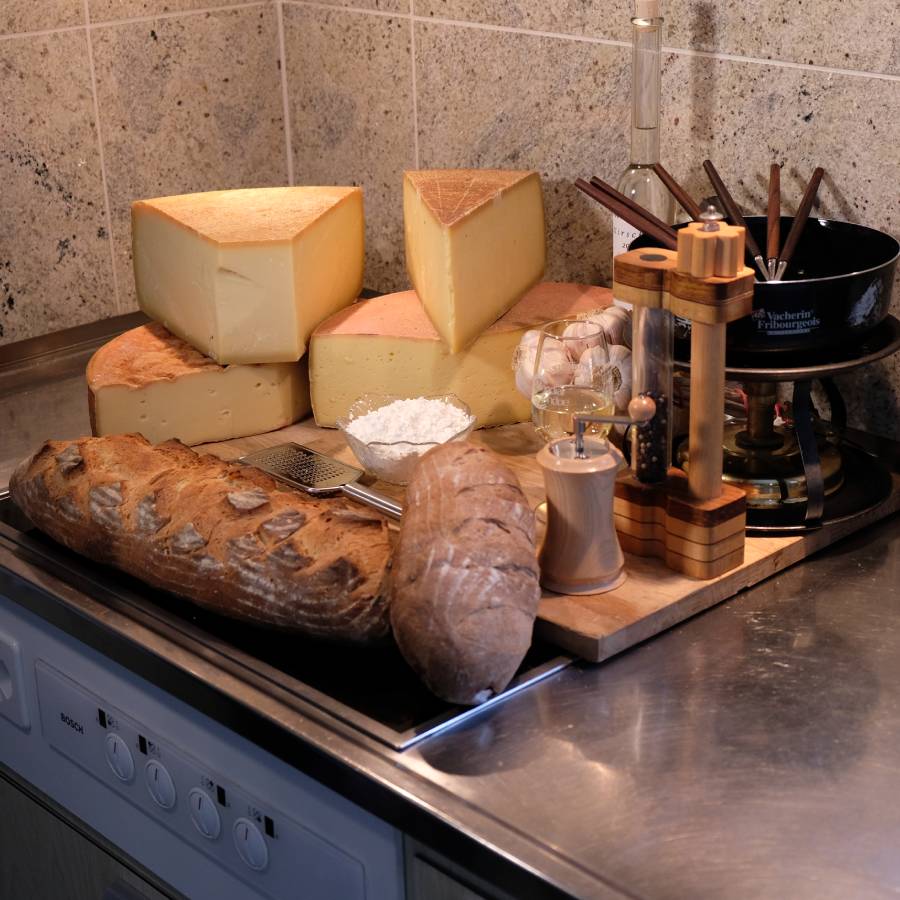
The most well-known classic fondue is the moitié-moitié, made with 50% Gruyère and 50% Vacherin Fribourgeois. Depending on the region and the producers, the ratio can vary from 1/3 to 100% Gruyère and 0 to 2/3 Vacherin. The fondue made with 100% Vacherin, called "fondue fribourgeoise," is different because it uses water instead of wine. Some classic recipes with Gruyère and Vacherin mix a little water with the wine. Personally, I prefer it without water.
Traditionally, to achieve a good consistency, potato starch is added to the fondue, the most well-known from our ancestors, but corn starch can also be used.
You can get the ready-to-use blend of the fondue that was crowned world champion at the 2017 Fondue World Championship by filling out the order form on our site or by sending us an email. This blend already contains all the ingredients, such as 8 cheeses (Gruyères AOP and Vacherins AOP), starch, garlic, nutmeg, and pepper. All that's left to do is add the wine and, at the end of preparation, a splash of brandy, traditionally Kirsch (cherry brandy), as detailed below.
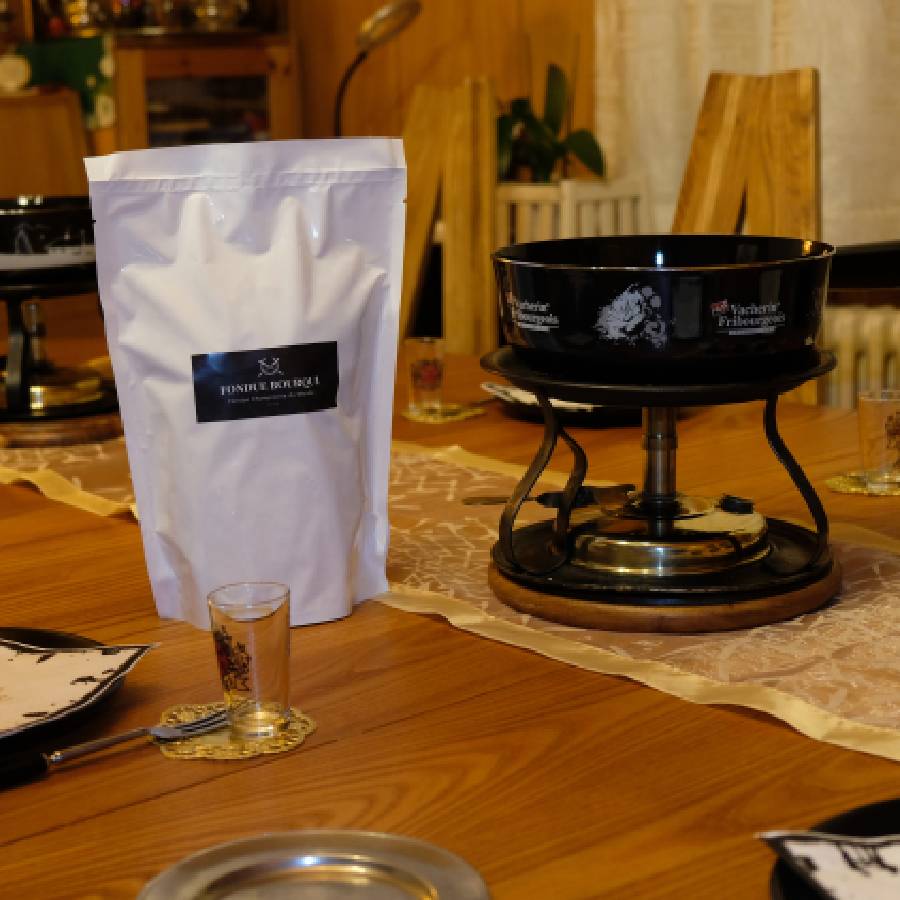
One kilogram of fondue can serve 4 to 6 people, depending on the situation. Generally, you count 200g of cheese per person for average eaters, 250g for big eaters, especially after a day of skiing. If you have a large group or children, I recommend counting 6 people for 1 kg of cheese. Similarly, if you are planning a starter and dessert, 1 kg for 6 people is sufficient.
For the bread, take 120g per 200g of cheese. It's ideal to have several types of bread to vary the flavors. Avoid choosing bread that is too soft, as it won’t hold well on the fork. Opt for a long loaf (baguette) to get the most crust.
You can enjoy the fondue with bread and/or potatoes. The Vacherin fondue is traditionally eaten with potatoes. The moitié-moitié Gruyère fondue is usually served with both. Potatoes can ideally replace the bread for those who are allergic to or intolerant to gluten.
If you want to make a fondue with mushrooms such as boletes, morels, or truffles, it's best to add them to a moitié-moitié blend, as using them in a different mix may result in a too salty taste. Simply soak the dried mushrooms in the wine at the start, before adding the cheese. In this case, you’ll need to add a bit more wine because the dried mushrooms will absorb some.
If you’re in Valais or have some leftover raclette cheese, you can replace part or all of the Vacherin with raclette cheese, but I recommend not exceeding a ratio of 1/3 raclette. A bit of raclette cheese gives the fondue more consistency and smoothness, but depending on the amount, you may need to add a little more wine.
In German-speaking Switzerland, some people use Appenzeller or Tilsit cheese instead of Vacherin, and I’ve even tried a 100% Appenzeller fondue. Of course, it was quite different from mine, but I found it enjoyable. Others use Emmental or local cheeses.
Many other variations are also possible. There are no limits to your imagination when adding vegetables, spices, or herbs like shallots, onions, curry, chili, parsley, chives, or wild garlic, to name just a few examples.
It’s also delightful to enjoy fondue with vegetables or fruits like cherry tomatoes, zucchini, apples, and pears, in addition to or instead of bread and potatoes.
Some people replace Chasselas with other dry white wines, Champagne, cider, or beer (with or without alcohol), or even just water. Personally, having tasted all these variations, I prefer fondue with Chasselas, but of course, you are free to experiment and find your own preferred combination.
The fondue can be made directly on the burner at the table, so there's no need to delegate someone to prepare it in the kitchen. This way, everyone can enjoy the aperitif while stirring the fondue. The advantage is that if you have a large table with two or more caquelons, all the fondues are ready at the same time, no matter how many guests there are.
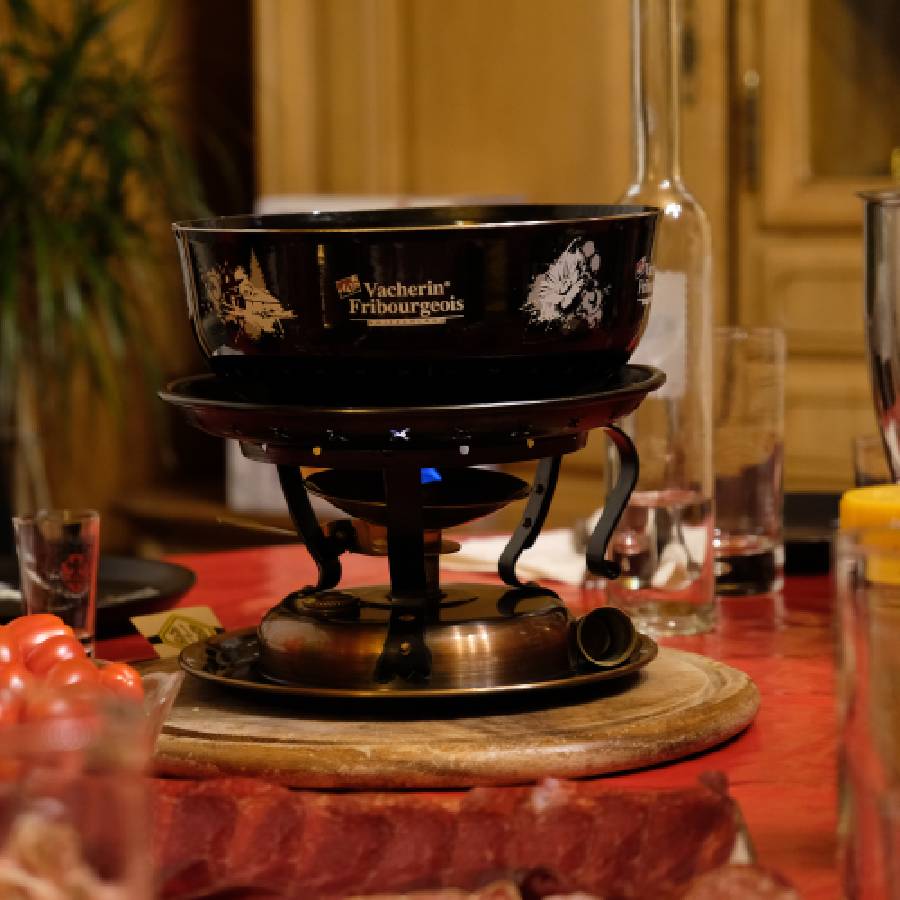
The standard caquelon made of cast iron or enameled steel, with a diameter of 21 cm, can hold up to 1.2 kg of cheese, which is suitable for 6 people per caquelon. The 23 cm caquelon can hold 1.6 kg of cheese, enough for 8 people.
It is recommended to use a wick burner with burning alcohol, as it is easier to adjust, and a caquelon made of enameled steel or enameled cast iron, which provide better heat distribution. The enameled steel caquelon is lighter and less fragile than the cast iron one. You can order an enameled steel caquelon on our website. A clay caquelon tends to burn the fondue in the center. In this case, it’s better to place a metal plate on the burner before setting the caquelon on it to distribute the heat more evenly.
It’s advisable to avoid using fondue forks made for Chinese or Bourguignonne fondues, which only have 2 prongs, as the bread or potatoes have difficulty staying on them. Fondue forks with 3 prongs, designed specifically for cheese fondue, are more suitable.
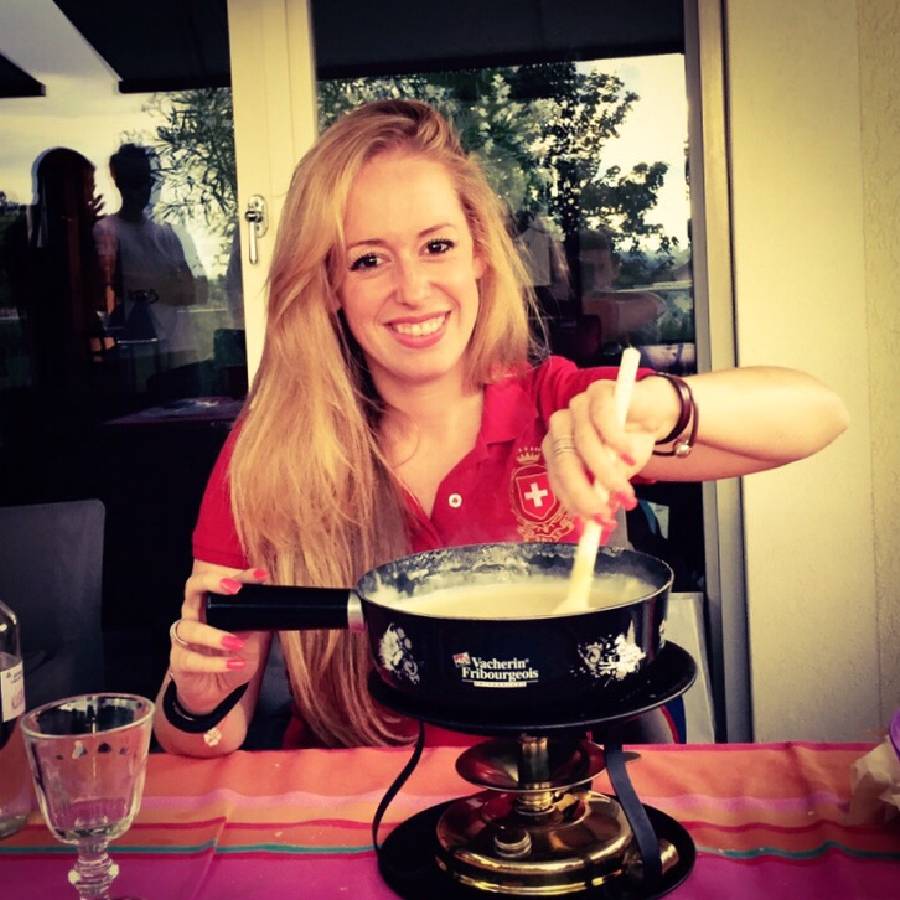
There is no set order. The Fribourg tradition involves rubbing garlic on the bottom of the caquelon and heating the wine before adding the cheese, but this is not essential. You can add everything from the start and stir, but be careful not to spill any. The easiest method is to pour all the wine in and add half the cheese at first, then gradually add the second half in small amounts as space opens up with the melting cheese. If you have a large caquelon and a small fondue to prepare, you can, of course, add everything at once. With the ready-to-use World Champion Fondue blend, the garlic and starch are already included. Simply add the amount of wine indicated on the label and pour in the blend as described above.
Light the burner with the flame at full heat and keep stirring (be cautious if using gas or electric heat, don’t set it to the maximum as it would be too hot). If your blend doesn't contain starch, dilute the starch in cold wine before heating.
The important thing is to always stir (no need to go fast) and make sure to stir through the center to prevent the fondue from burning, as it’s hotter in the center above the wick. This is why it’s advised to stir in a figure-eight pattern, as you pass through the center twice. But don’t worry, if you stir in circles, it won’t “turn” badly.
When everything is almost melted, add a splash of brandy. Traditionally, Kirsch (cherry brandy) is used, but Williams pear brandy or apple brandy also work well. In the canton of Fribourg, it’s common to use Botzi pear brandy, made from a small Fribourg pear.
Once it's ready, immediately lower the heat to the minimum (on a wick burner, adjust the control cylinder to be level with the top of the wick). If the fondue blend doesn't already contain pepper and nutmeg, give a few turns of the grinder before inviting your guests to dip their bread. The World Champion Fondue blend already includes all these ingredients.
You should not let your guests simply dip their forks. Each person should touch the bottom of the caquelon with the bread on their fork and stir before lifting it, ensuring that the temperature is evenly distributed and the fondue remains smooth.
A small crust forms at the center of the caquelon, called the religieuse. It’s best to remove the religieuse before there is no cheese left in the caquelon. It will be even better, softer, and easier to detach without scratching the caquelon. If you prepared the fondue on the burner, a religieuse might have already formed before you start eating. It's better to detach it and eat it right away, as it tastes even better than the religieuse eaten at the end.
For those who enjoy Kirsch or another brandy, you can dip your bread in it from time to time before stirring it in the caquelon.
Be careful, the most common mistake is adding too much wine. It’s better to add too little and adjust with more at the end, depending on the desired consistency. Otherwise, you will need to add more cheese. Don’t follow the proportions suggested in most recipes, as in two-thirds of cases, they use too much wine. The right proportion is about 0.6 to 0.7 dl of wine per 200g of cheese.
Another frequent mistake is letting the fondue burn. Once the fondue is ready, it should never boil. If bubbles form, immediately lower the heat or even temporarily remove the caquelon from the burner to quickly return to the right temperature. Vacherin Fribourgeois doesn't tolerate high temperatures, and it will form grease on the edges if it's too hot. Be sure to check from time to time if the flame is set correctly, as the cylinder might fall by itself after a jolt, causing the flame to become too high again.
During preparation, if you see grease forming before everything is melted, it’s normal. The grease will disappear on its own when the fondue is ready to be served.
If you have leftover fondue at the end of the meal, you can reuse it for cheese crusts or a vegetable and cheese tart. You can even make another fondue, but in that case, add some more wine, cheese, and, if necessary, some starch.
If you're abroad, be careful, as sometimes what is called Kirsch or brandy is actually a mixture of water, sugar, and alcohol. Be sure to check the alcohol content. It must be at least 37.5%. If it’s only 17°, it’s best not to add anything at all. If you don’t add brandy, consider adding a splash more wine to compensate for the lack of liquid.
The Fribourg tradition often adds a pinch of baking soda to make the fondue even creamier and aid digestion, but this is optional and slightly changes the flavor. I personally prefer without it. Another option is to add a little lemon juice. Lemon juice helps to bind the mixture better if any grease appears on the edges, without needing to add more starch.
If you need equipment for a large fondue, you can request it through our contact form or by email at info@fonduebourqui.ch.
When the fondue is finished, simply fill the caquelon with cold water and let the tips of the forks soak in it during dessert.
Next, empty the water from the caquelon and wipe it with a paper towel to remove any cheese that has come off. Then, clean it with a dish brush under cold water, followed by a little dish soap and hot water. If there are still deposits left, use a scouring pad designed for pots (avoid steel wool). For the forks, do the same with the paper and brush. Turn the caquelon upside down and use the scouring pad to clean the bottom thoroughly, removing any black marks, while avoiding scrubbing over any decorative designs. Rinse and dry.
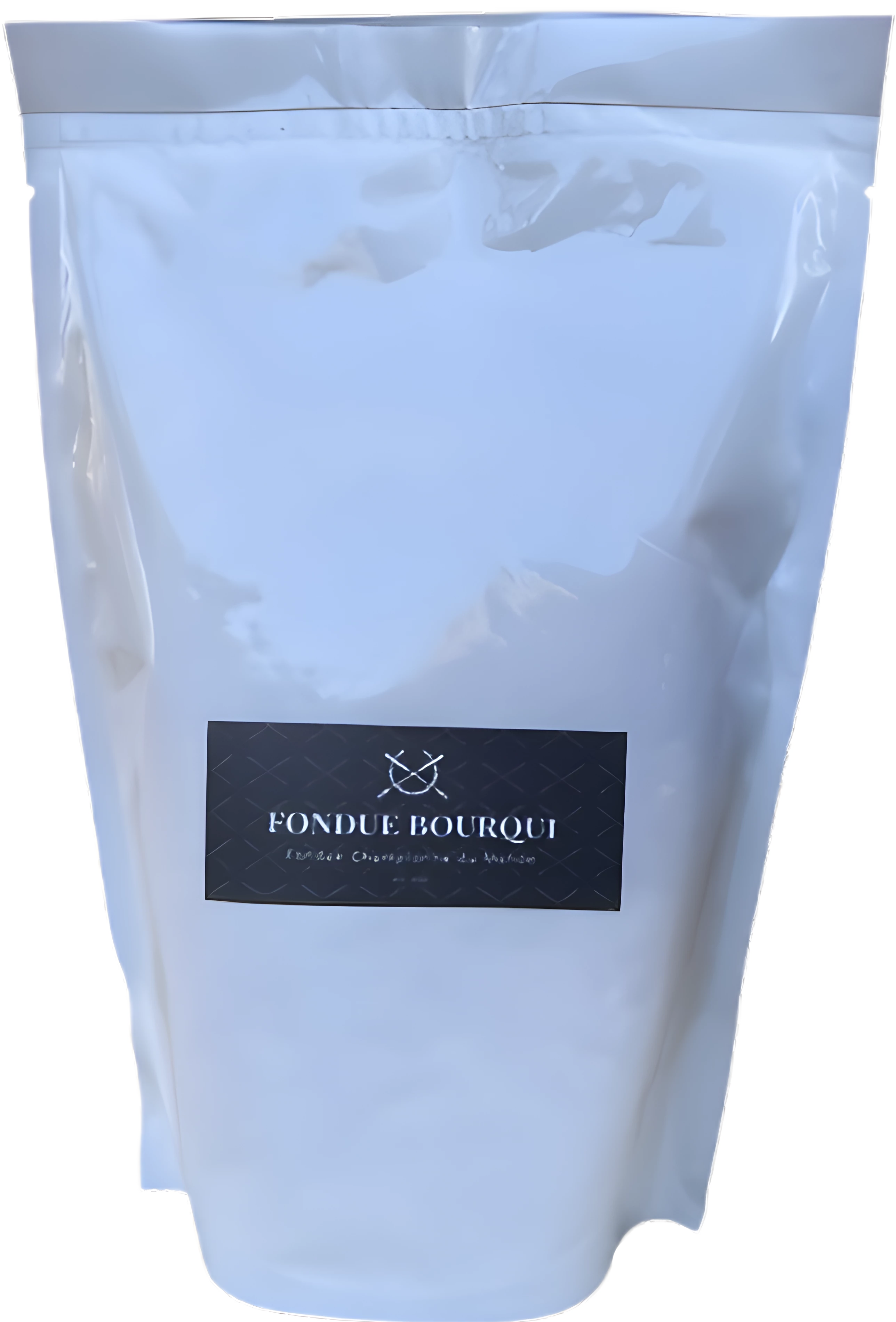
Ready-to-use blend for a delicious, convivial moment, awarded at the 2017 Fondue World Championship! A carefully crafted recipe for a tasty and unforgettable sharing experience.
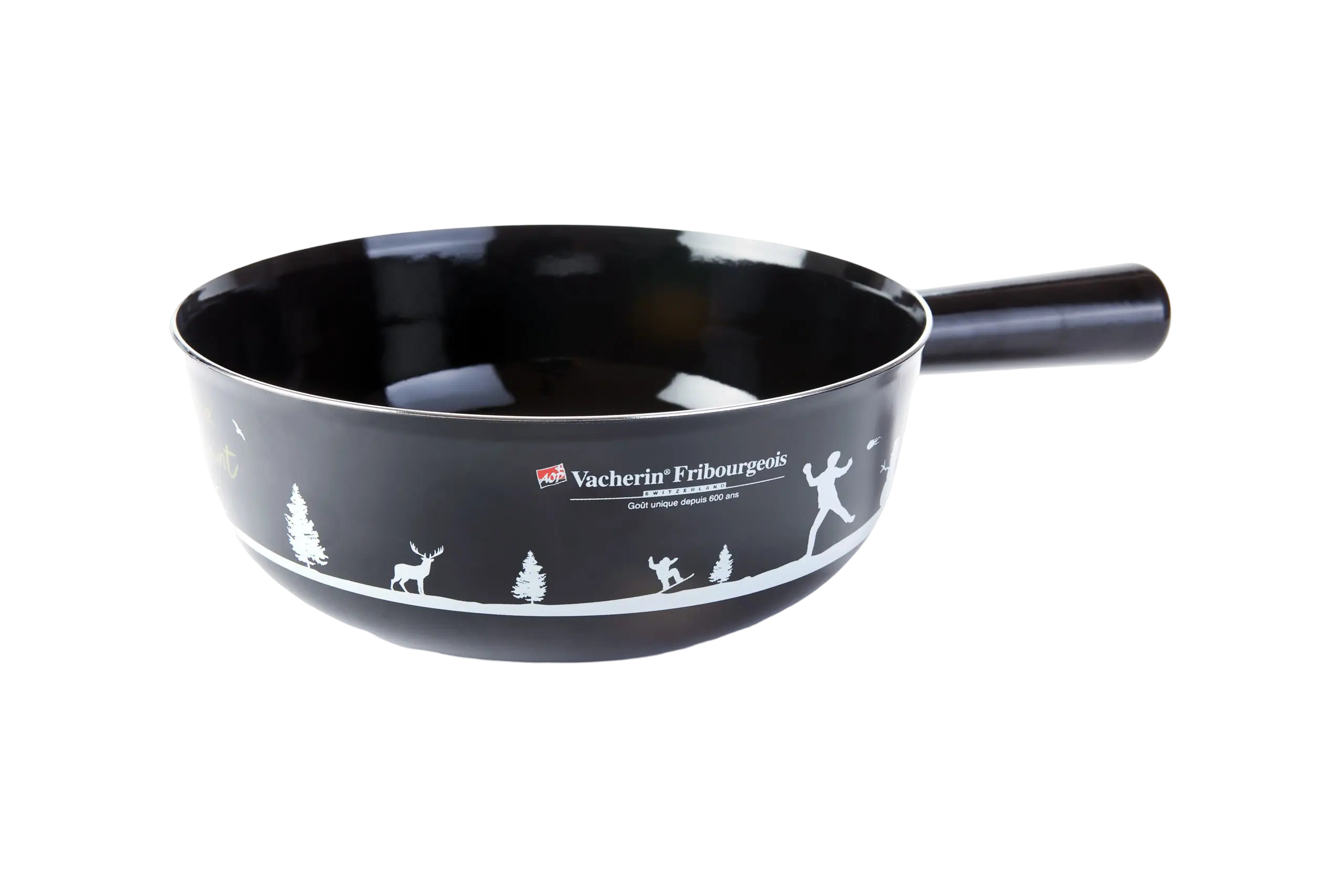
Practical and Lightweight: With a diameter of 21 cm and weighing only 1.1kg, it is perfect for sharing a warm moment with others, capable of holding up to 1kg of cheese.